Compare exchange desks and ATMs in Antalya. Check the final amount, bank fees, billing currency and what to do when a withdrawal fails.
A useful exchange starts with one question: how many Turkish lira will you receive for a given amount after deductions? In Antalya, an exchange desk or ATM can both work. A prominent rate or a “no commission” sign does not tell you the complete cost. Compare the final result and keep a backup way to pay.
Prepare before travelling
Ask your card issuer about use in Turkey, withdrawal limits, foreign transaction fees and currency conversion. A card-network logo on an ATM does not guarantee acceptance of your particular card: the issuing bank and country, restrictions and card product matter.
Take an available backup card and a little cash, stored separately. Choose cash based on what you already hold and what it costs to obtain at home; avoid an extra conversion simply because a familiar travel tip recommends it. Read more about money to bring to Turkey.
Where to exchange cash
Use a bank that confirms it can serve you or an authorised exchange office, called a yetkili müessese. the Turkish Ministry of Treasury and Finance’s guide describes the rules for these businesses. A Döviz sign alone is not a substitute for checking the operator. Avoid handing money to a street intermediary.
State your amount and currency, and ask for the total in TRY and any deductions before handing over notes. When you sell euros or dollars, the relevant rate is the office’s buying rate for that currency. Check the calculation, count the notes at the counter and keep the transaction document. Confirm acceptance of less common currencies in advance; it cannot be promised at every desk.
Antalya Airport’s official page lists ATMs and exchange services in the terminals. They can cover your initial expenses, but their location does not establish whether the rate is better or worse. Exchange what you need immediately and compare offers for the same amount. A little lira can be useful for taxis and daily expenses.
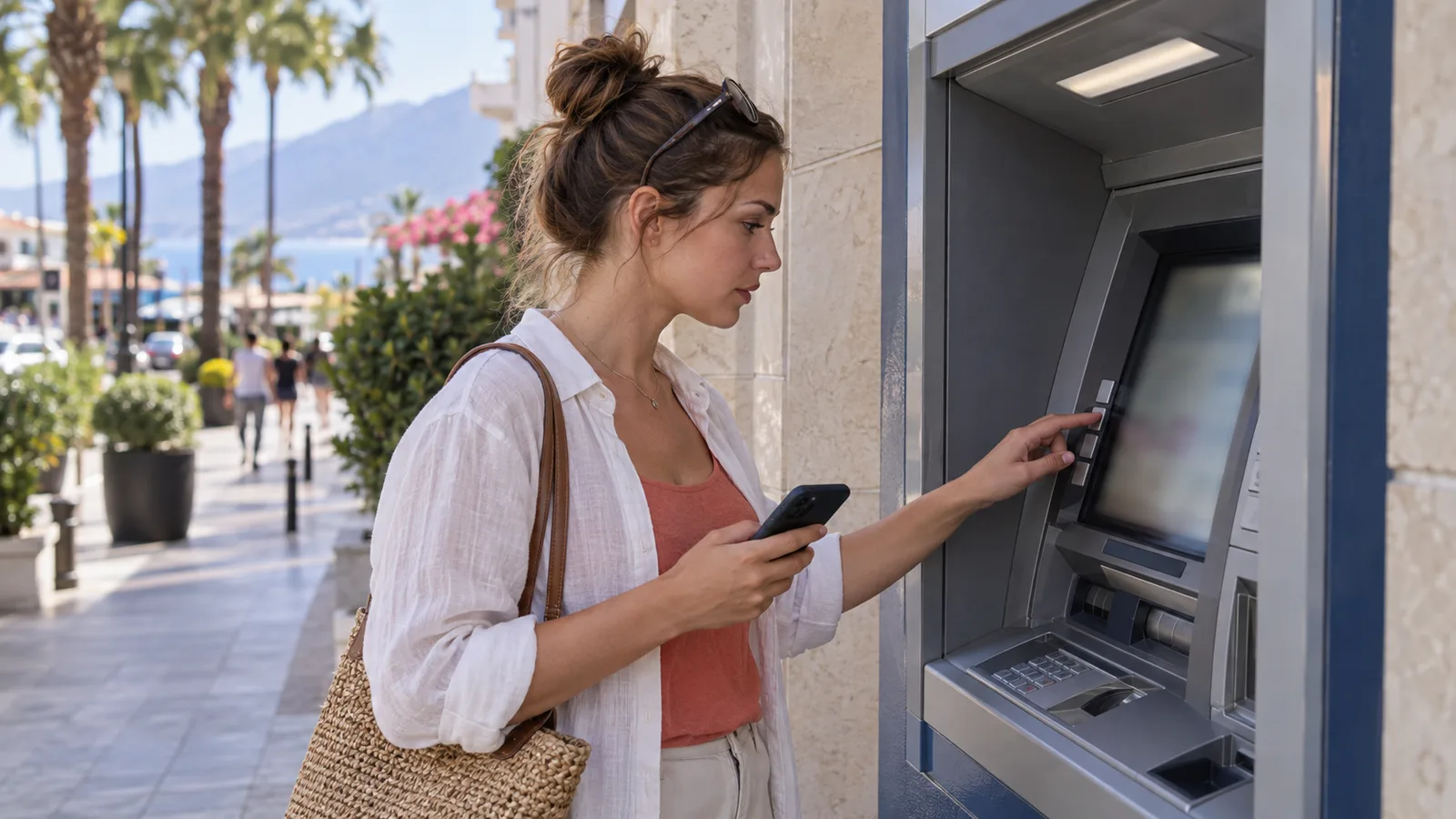
Check the amount, fees and conversion terms before confirming. AI-generated illustration; it does not depict a particular bank branch.
An ATM involves three separate costs
Prefer a well-lit machine at a bank branch; during opening hours it is easier to approach staff. If the card slot looks damaged or has suspicious attachments, use another machine. Shield your PIN and do not hand your card to a stranger offering help.
First choose the cash amount in TRY. Then distinguish the ATM owner’s charge, any conversion offer and your issuer’s own fees. The screen may show the operator’s surcharge without displaying all issuer costs. Credit-card cash withdrawals can have separate cash-advance fees and interest: check your agreement beforehand. No ATM list is free for every card.
With a fixed charge, several small withdrawals can cost more than one larger withdrawal. Balance that saving against your limit and the risk of carrying more cash. Keep the receipt or transaction details and wait until the sequence has finished; machines return cards and notes in different orders.
DCC: cash currency differs from billing currency
An ATM dispensing lira may still offer to bill you in your card’s currency. This is dynamic currency conversion, or DCC. Visa’s DCC guidance explains that both amounts, the rate and markup should be disclosed, with the decision left to the cardholder.
Compare the offer with your bank’s terms. Billing in TRY without the operator’s conversion is a practical starting point, but does not guarantee zero fees or the lowest total for every card. Visa recommends declining an unclear DCC offer. Distinguish declining conversion from cancelling the withdrawal; if the screen is confusing, cancel and choose another method.
For card purchases, check the amount and billing currency before confirming too. Visa’s exchange-rate calculator provides an indication, not a guaranteed final debit: issuer fees and processing dates can affect the result.
If no cash appears or your card is retained
Record the location, machine number, time and amount; keep the receipt and bank notification. Do not immediately repeat an uncertain withdrawal. Contact the ATM owner and your issuer through an official app, website or saved number, rather than relying on a sticker. If your card is retained, block it as advised by your issuer; waiting at the machine does not protect the account. Same-day recovery is not guaranteed.
Bellboy’s tip
Save your bank’s contacts and enable alerts before departure; Visa’s travel guidance supports this preparation. Mobile data helps you find branches and reach support. Choose an eSIM through blueSIM and install it ahead of travel after checking device compatibility and plan terms. Arrange bank verification codes and access to your existing number separately.
Choose cash exchange by the net lira received and ATM withdrawals by the combined costs and clear terms. Some cash and another payment method help you keep going if a transaction fails.