Trip planningOctober 10, 2026· Last reviewed October 10, 2026
Understanding Moscow: a calm introduction to the city
Moscow takes more than a day to understand. Start with its historic centre, river, neighbourhoods and culture, without an overloaded itinerary.
Where do you begin with a city that already looks larger on the map than your travel plan? In Moscow, it helps not to understand everything at once. A historic square, a museum and a quiet side street tell different stories. Together, they offer more than a long list of familiar names.
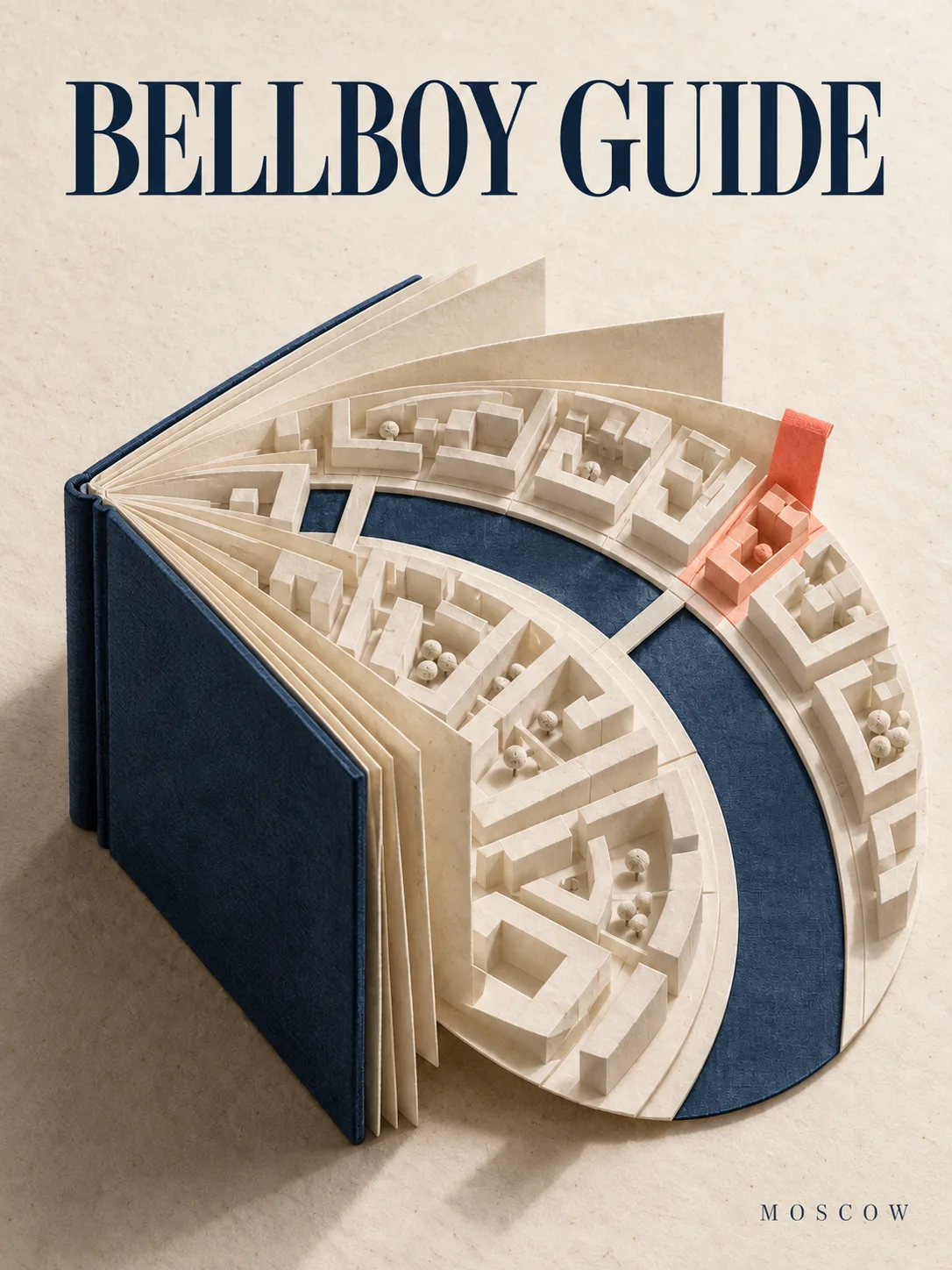
Three reference points are enough for an initial overview: the historic centre, the Moskva River and one chosen neighbourhood. You can build your day from there. This introduction explains the connections; airports, railway stations and urban transport are covered in separate practical guides in our series.
1. Use the historic centre as a reference point
The Kremlin and Red Square form a central historic ensemble recognised as a UNESCO World Heritage property. The Kremlin is not a single building but a walled complex. Red Square lies outside those walls.
This distinction is useful for orientation: looking at the complex, walking across the square and visiting a museum are different activities. Do not automatically treat them as one stop. Someone interested in observing architecture needs a different day from someone who wants to spend time with collections.
2. Get to know one neighbourhood
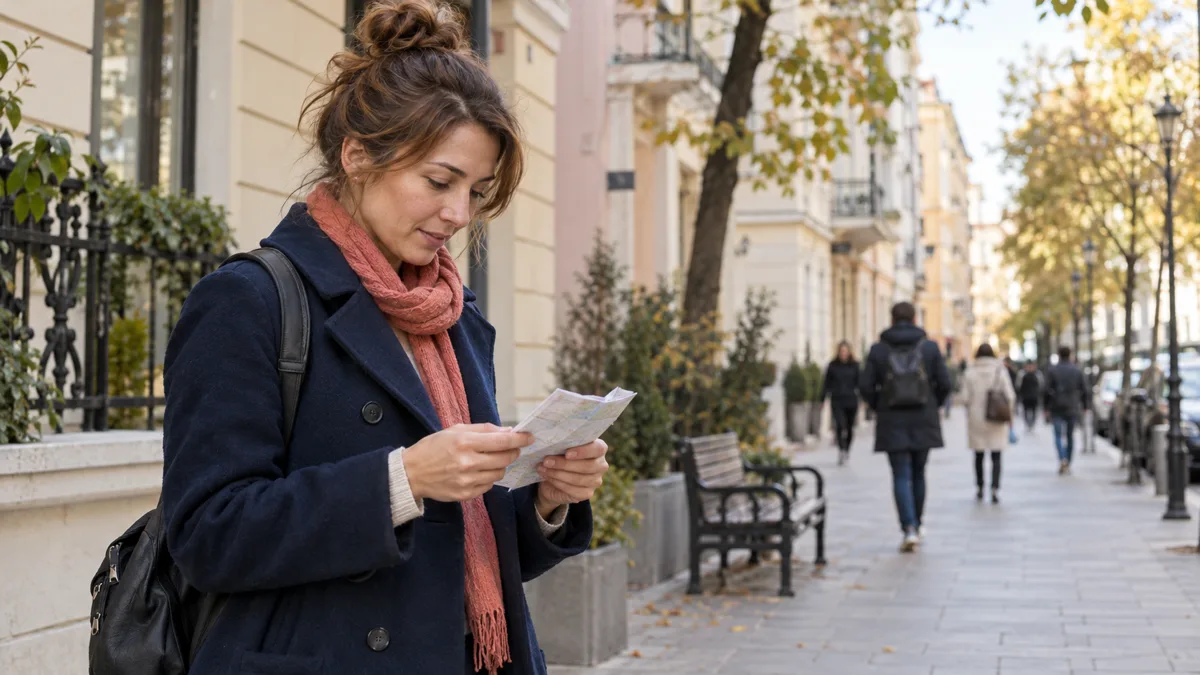
Away from the large squares, the scale changes. Side streets bring entrances, small shops, façades and everyday journeys into view. Arbat can provide a starting point for a first walk; Zamoskvorechye, south of the river, is another possibility.
These are not interchangeable backdrops. Choose a starting point and explore the surrounding streets instead of crossing several neighbourhoods merely for photographs. Public streets and accessible squares are good places to observe daily life; a residential courtyard is not automatically a public passage.
One manageable stretch is more useful than an overloaded daily list. AI-generated illustration, not a documentary photograph of a specific location.
3. Read the river as a connection
The Moskva can help you understand how places relate to one another. Looking across the water sometimes explains more than another name on a map. Before walking, check where usable bridges and access points actually are: nearby on a map does not always mean directly connected.
A stretch beside the water can provide a break between cultural stops. It does not need to become an exhaustive riverside itinerary. A bench, a short look at the city and time without an appointment can be part of the day.
4. Choose culture according to your interests
A museum becomes more useful when you know what you want to see. The Tretyakov Gallery offers an introduction to Russian art; its historic building in Lavrushinsky Lane is closely connected to the collection’s history.
For an actual visit, check the precise venue and current exhibition rather than only the institution’s name. The same applies to theatres, concerts and smaller exhibition spaces. One deliberate focus leaves more room for what genuinely catches your attention along the way.
5. Keep the first day deliberately small
Choose one historic or cultural focus.
Add a walk in the surrounding area.
Allow time for food, journeys and a break.
Assess distances along real routes, not straight lines.
This is not a fixed route or a promise to know Moscow in a day. It is a way to divide a large place into understandable sections. Save your accommodation’s name and address in Cyrillic as well; this can help when matching them to local signs.
One city, not the whole country
Moscow is a beginning, not a miniature version of Russia. Other regions’ landscapes, languages and rhythms of life remain subjects in their own right. Our introduction to Russia’s cities and cultures provides that wider context.
The next practical step is therefore not a longer list but a more precise question: which airport will you arrive at, which railway station will you use next, or which neighbourhood would you like to understand on foot? The next articles will build on those questions.