The U.S. Border in Abu Dhabi: How Preclearance Works
Abu Dhabi can let passengers complete U.S. immigration and customs before boarding. Here is who can use Preclearance and why the facility is currently suspended.
The route sounds almost paradoxical: the aircraft is still in Abu Dhabi, yet the passenger has already crossed the U.S. border. On arrival in America, the flight can be treated like a domestic service, with no second immigration and customs queue.
This is not a diplomatic privilege or an airline fast-track product. It is U.S. Preclearance — full United States border processing carried out at the departure airport.
Important as of 9 October 2026: the U.S. Preclearance facility in Abu Dhabi is temporarily closed. Etihad advises that passengers currently complete immigration and customs after arrival in the United States. No reopening date has been published. Always check the airline’s current status page before travelling.
The short answer
During normal operations, passengers on eligible nonstop Etihad flights from Abu Dhabi to the United States complete U.S. Customs and Border Protection procedures before boarding. Once admitted, they enter a secure area and board with precleared status.
On arrival, the aircraft can be handled like a domestic flight: passengers do not enter the general international immigration hall and can continue towards baggage claim, the exit or a connecting flight. Baggage and transfer procedures still depend on the airport and itinerary, so they must be confirmed with the carrier.
What happens in Abu Dhabi
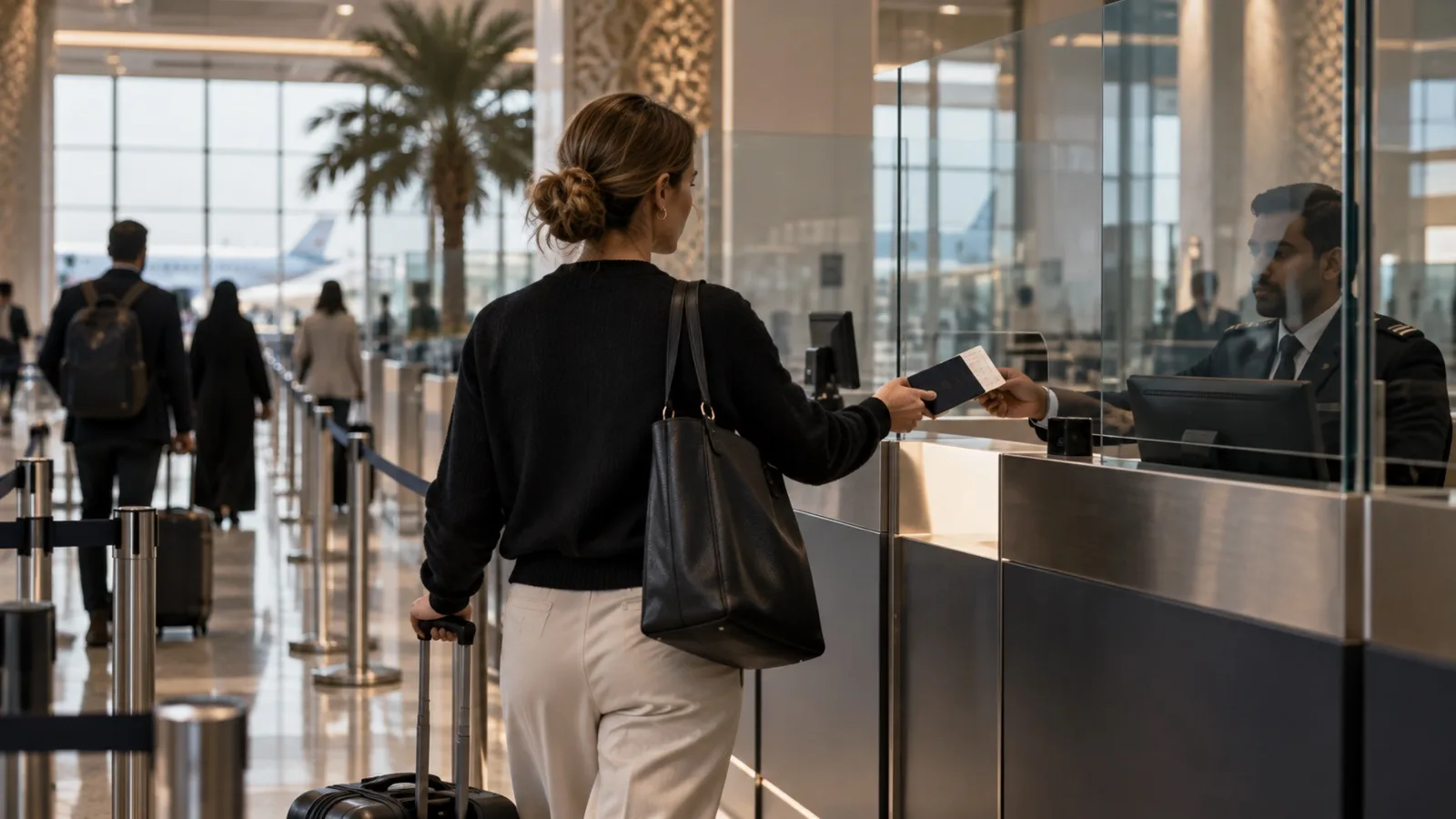
The process is conducted by officers of U.S. Customs and Border Protection, not airline staff. In practical terms, the passenger completes the same border process that would normally take place at the first U.S. airport.
The procedure may include:
a passport and admissibility check;
questions about the purpose and duration of the trip;
verification of a visa, ESTA or another basis for entry;
customs and agriculture declarations;
additional inspection or an interview when required by the officer.
There is no separate Preclearance application. Under normal operations, it forms part of the journey on an eligible nonstop Etihad flight to the United States. It does not replace a visa or ESTA and does not guarantee admission: CBP makes the decision.
Preclearance is genuine border processing before boarding, not an extra airline document check at the gate.
Why this is not a normal pre-flight check
Flights to the United States often involve early document verification, extra questions or another security check at the gate. None of those steps alone constitutes Preclearance.
The distinction is simple: after an ordinary pre-flight check, the passenger still crosses the U.S. border on arrival. After U.S. Preclearance, immigration and customs have already been completed before departure.
Who can use it
The facility is not reserved for U.S. citizens. During normal operations, passengers on eligible Etihad nonstop flights can use it regardless of nationality, provided they have a valid basis for entering the United States.
U.S. citizens present the documents required for their return;
travellers from visa-required countries need a valid U.S. visa;
eligible Visa Waiver Program travellers need an approved ESTA and the correct passport;
all passengers remain subject to current document and declaration requirements.
Preclearance cannot correct a visa error, extend an ESTA or remove restrictions attached to a traveller’s status. Its advantage is where the border check takes place, not a relaxation of the entry rules.
What the temporary closure changes
While the Abu Dhabi facility remains closed, passengers follow the conventional process: immigration and customs at the first U.S. airport of arrival. This matters most when there is an onward connection.
An itinerary that was comfortable with operating Preclearance may need more time if the traveller must now:
clear U.S. immigration;
collect checked baggage when required;
pass through customs;
return baggage to the carrier;
clear security and reach the next gate.
Do not assume that an old connection time still works. Confirm the first U.S. port of entry and ask Etihad or the carrier operating the next segment to explain the baggage process.
Why Abu Dhabi is exceptional
The U.S. Preclearance programme dates back to 1952, yet facilities remain limited worldwide. Abu Dhabi is the programme’s only announced location in the Middle East and Asia. A new facility at Zayed International Airport opened in 2024 after operations moved from the former terminal.
For a traveller starting in Dubai, this creates an unusual route choice: it can be worth comparing a DXB departure with an Etihad flight from AUH, taking not only the fare and ground journey into account but also the current Preclearance status. Future passenger services on Etihad Rail will add another option between the cities; see our guide to the Dubai–Abu Dhabi train.
Checklist before flying to the U.S. via AUH
Check the Preclearance status. Do not rely on an old article or a previous trip.
Verify your entry permission. The visa or ESTA must match the passport and itinerary.
Recalculate the connection. While the facility is closed, allow time for processing at the first U.S. airport.
Confirm the baggage procedure. This is especially important when the next segment is on a separate ticket.
Declare food and agricultural items. Declaring an item is safer than guessing whether it is allowed.
Keep evidence available offline. Have the passport, visa or ESTA, accommodation address and onward or return itinerary ready.
The practical conclusion
U.S. Preclearance makes Abu Dhabi one of the rare places where the American border can begin before take-off. When operating, its principal advantage is not a lighter formality but the transfer of full border processing to the pre-boarding stage and a more direct arrival in the United States.
For now, however, the route must be planned around the temporary arrangement: processing takes place in America. Check the official status before buying and reassess the connection time accordingly.