Relocating a pet begins long before the flight. This guide brings the microchip, vaccinations, import permit, carrier and arrival process into one clear sequence.
Moving with a pet may look like a single task: buy a ticket and place the carrier beside the suitcases. In practice, it is a chain of connected processes. A veterinarian confirms the animal's health and vaccinations, the authorities issue an import permit, the airline accepts the animal under its own rules, and the home you choose must genuinely allow pets.
That is why a cat or dog should not be the last line added to a general relocation checklist. If the main sequence is not yet clear, begin with our step-by-step guide to settling in Dubai, then manage your pet's journey in parallel, with its own deadlines, documents and confirmations.
In brief: first confirm that the specific animal may be imported and identify the rabies-risk category of the country of departure. Then verify the microchip, vaccinations and, where required, the rabies antibody test; agree the transport arrangements; obtain the MOCCAE permit; and prepare the original documents for veterinary inspection on arrival.
Start with the country of departure and the animal
The same cat departing from two different countries may face different requirements. MOCCAE classifies countries by rabies risk. An animal arriving from a high-risk country requires laboratory evidence of an adequate antibody level; this step may not apply to a country on the official low-risk list.
Do not infer the category from memory, a neighbouring country or an EU pet passport. Before beginning preparations, open the current MOCCAE service for importing cats and dogs and check the country where the animal has been staying before departure.
Check the species and breed at the same time. Personal imports are limited to two animals per year: two cats, two dogs, or one cat and one dog. Certain dog breeds are prohibited, while Bengal cats and servals are subject to additional proof-of-origin conditions. If the breed is mixed or described ambiguously in the documents, request written clarification from MOCCAE before buying a ticket.
The microchip number must connect the entire file
The animal must be identified with a permanent microchip. The number in the pet passport, health certificate, laboratory result and permit application must match the number read by the scanner.
Before vaccinations and certificates are completed, ask the veterinarian to scan the chip and compare every digit. If one document contains an error, do not correct it by hand without confirmation from the competent authority. At the border, the exact number matters.
Vaccinations depend on the species
Cats and dogs need a valid rabies vaccination. MOCCAE states that a primary rabies vaccine may be administered only when an animal is at least 12 weeks old. The official requirements also include species-specific vaccines.
For dogs, these cover canine distemper, parvovirus and infectious canine hepatitis. Leptospirosis vaccination is also required, or the applicable testing alternative where the country of departure does not use that vaccine. For cats, the listed vaccines cover feline panleukopenia, rhinotracheitis and calicivirus.
The record should clearly show the vaccine name, manufacturer, batch number and administration date. A sticker alone, without the animal's identification and the authorised professional's signature, should not be treated as a complete record.
The carrier, documents and veterinary preparation all take time; it is best to manage them as one sequence.
The antibody test is not required for every route
If the country of departure is classified as high risk, a rabies antibody titration test from a laboratory recognised by the competent authorities of that country is required. The result must be at least 0.5 IU/ml.
After a primary vaccination, or when there has been a lapse between vaccinations, MOCCAE requires at least 21 days between vaccination and the blood draw. With a timely booster and uninterrupted vaccination history, testing may be possible without this waiting period. The official service also sets conditions for the validity of the laboratory result, so do not automatically reuse dates from an earlier move.
The practical rule is simple: first let the veterinarian confirm the continuous vaccination history and the country's category, then build the testing and travel calendar. A ticket should not dictate the medical timeline after the fact.
Minimum age also depends on the risk category
At the date of our review, MOCCAE listed a minimum import age of 12 weeks from a low-risk country and 15 weeks from a high-risk country. These thresholds reflect the permissible vaccination age and required interval, not merely the animal's size.
For a puppy or kitten, it is especially risky to choose the flight date first and try to fit vaccinations and laboratory work around it. If the animal's age or vaccination schedule does not meet the rules, postponing the flight is safer than hoping for an exception at the airport.
Obtain the MOCCAE permit before departure
An advance MOCCAE import permit is required. It is valid for 90 days from the date of issue. This does not mean that it should be obtained at the start of a preparation process lasting several months: first make sure the medical schedule, flight and validity windows of all documents can align.
On arrival, the animal undergoes inspection and release. You will need the transport or customs document, the pet passport or vaccination record, a veterinary health certificate endorsed by the competent authority in the country of departure, and, where applicable, the rabies antibody laboratory result.
On 18 September 2026, the MOCCAE service listed a federal fee of AED 200 for an import permit per animal, plus a release fee of AED 500 for a dog or AED 250 for a cat. This is not the full relocation cost. Veterinary care, laboratory testing, government endorsement, the carrier, transport, cargo handling and any agent's fee are separate. Check the current amounts in the official service before paying.
The health certificate must come from the competent authority
A routine note from a private clinic may not be sufficient. MOCCAE requires an endorsed veterinary health certificate issued by the competent veterinary authority in the country of departure. The exact procedure depends on the local system: a private veterinarian may prepare the medical record, while an official authority endorses the export certificate.
The animal must also be treated for internal and external parasites within 14 days before departure, with the treatment recorded in the health certificate or pet passport. Do not administer it too early, and do not leave it until the day of the flight without coordinating with the veterinarian.
Government rules and airline rules are separate
An import permit does not guarantee that the animal has a place on a particular flight. The airline separately evaluates the route, breed, age, health, aircraft type, temperature, carrier dimensions and availability of live-animal transport.
Emirates states that animals travelling on itineraries ending in Dubai are carried as cargo. Ordinary pets are not accepted in the Emirates passenger cabin; the exception described on its published page does not apply to ordinary cats and dogs. If another airline operates the flight, or the itinerary includes a connection, obtain the rules of every operator in writing.
MOCCAE requires direct consignment from the exporting country; during transit, the animal must not come into contact with other animals. A connecting itinerary therefore needs to be checked not only for connection time but also for the way live cargo is handled at the transit airport.
Do not buy your passenger ticket on the assumption that you can add the pet later. Confirm transport for the animal on the required date and at the correct airport first, then align your own itinerary with it. Confirm where the animal is handed over before departure and collected after veterinary release: the cargo terminal and passenger arrivals hall are not the same place.
The carrier is part of preparation, not just packaging
The container must meet IATA requirements and the carrier's own rules. The animal must be able to stand naturally, turn around and lie down, while the structure must be strong, ventilated and protected against accidental opening. Choose the precise dimensions from the animal's measurements, not its weight alone.
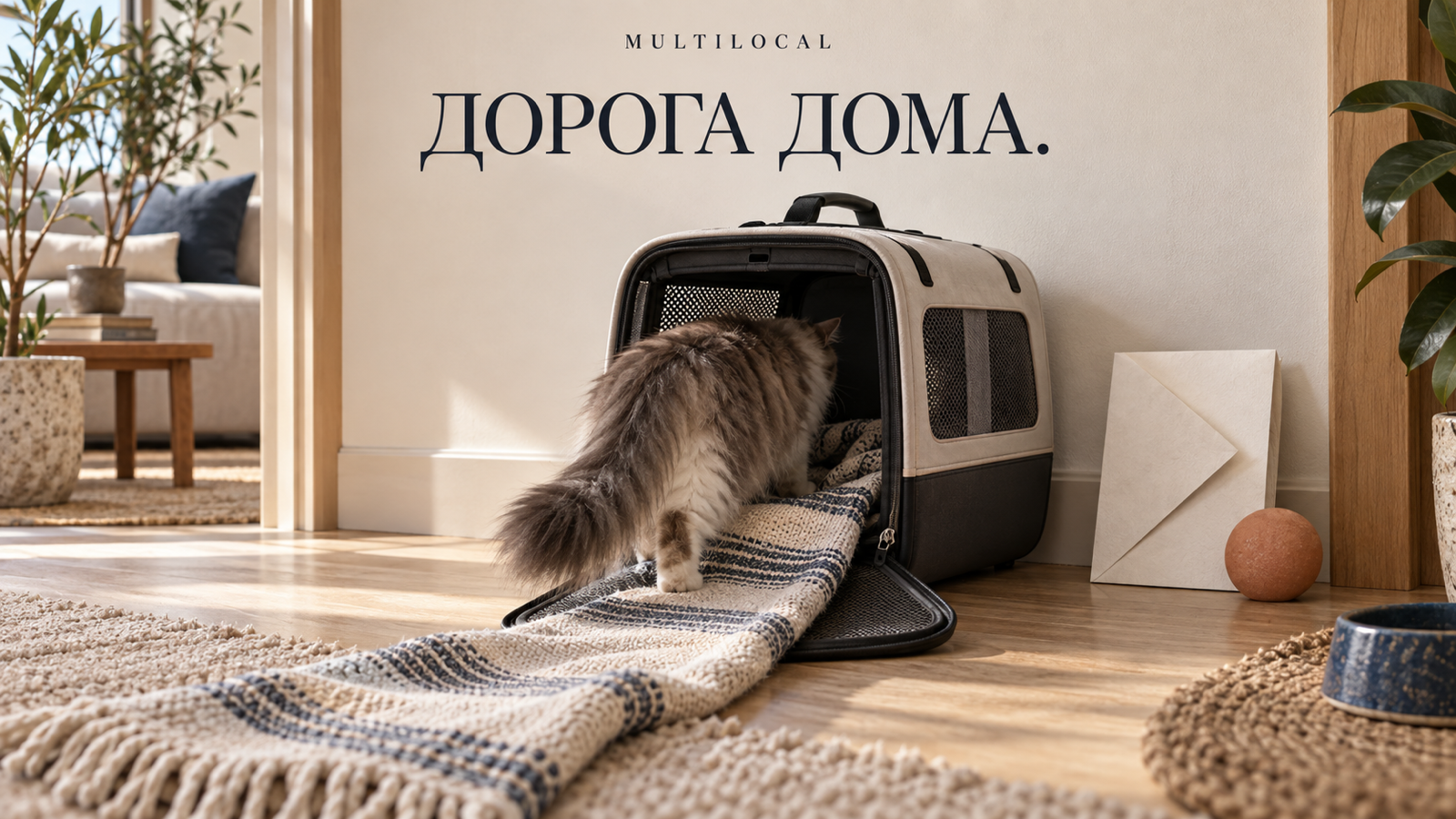
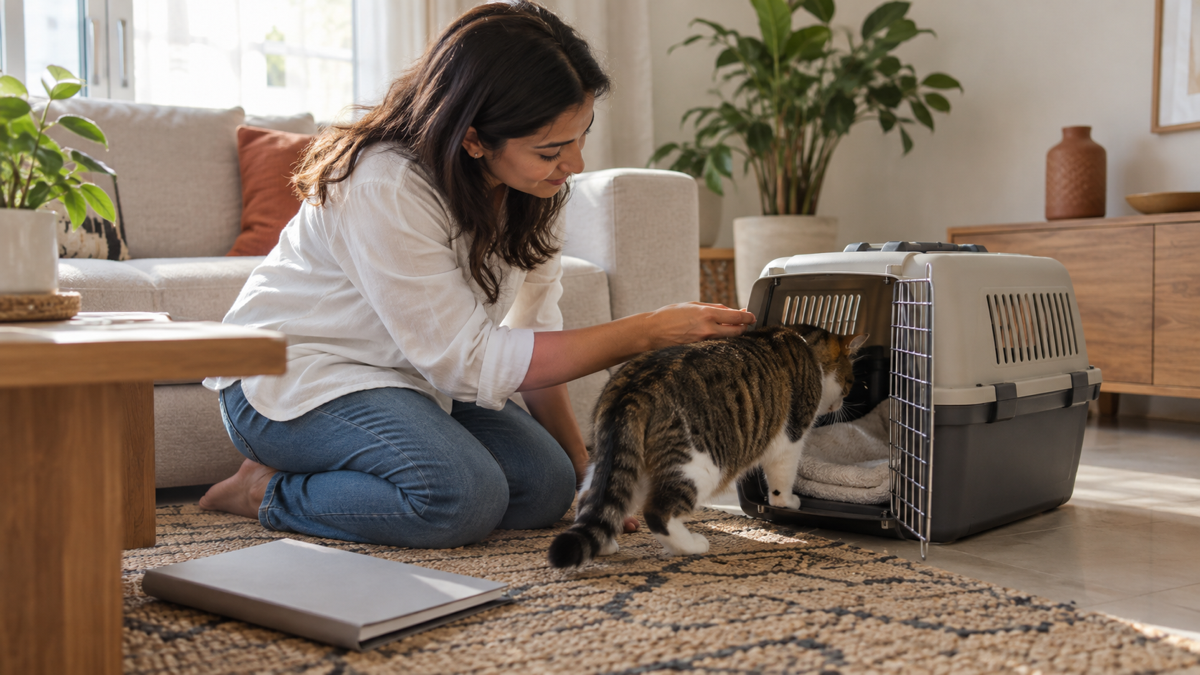
Leave the carrier open at home well in advance. Place familiar bedding inside, feed nearby and gradually increase the calm time spent in it. Do not use sedatives on your own initiative: their effect on breathing and blood pressure during flight requires a veterinarian's decision and agreement from the carrier.
Check the home before sending the animal
Even a legally imported pet does not automatically have the right to live in every building. Before signing a lease, confirm with the owner and building management whether pets are permitted, whether there are restrictions on species, size or shared areas, and which rules apply to lifts, walks and cleaning.
If you are still choosing an area, add the animal's needs to your everyday Dubai route. Distance to a veterinary clinic, access to safe walking, shade, path surfaces and commuting time matter more than a vague promise that a building is pet-friendly.
Before entering a long-term contract, include the agreed permission for the animal in your written tenancy checks. Our sequence from agent checks to the contract will help separate a broker's assurances from the owner's documents and the building's rules.
Heat changes the daily routine
The work does not end on arrival. In summer, asphalt and exposed paths can injure paws, while a midday walk can place excessive strain on the body. Keep the first few days calm: provide water, a cool room and familiar food, take only short outings, and watch the animal's breathing, appetite and behaviour.
Choose both a regular and a 24-hour veterinary clinic in advance, and save the address and a way to transport the animal. If the pet arrives separately from the family, designate an adult recipient who has the necessary documents, understands the release procedure and can bring the animal home safely.
A practical sequence for relocating with a pet
Check whether the species and breed are permitted, the personal import limit and the risk category of the country of departure.
Scan the microchip and verify its number in every document.
Confirm the validity of rabies and species-specific vaccinations.
If required, build the antibody-test timeline with the veterinarian.
Choose the route and obtain written confirmation from the carrier.
Familiarise the animal with a compliant carrier.
Check the home, building rules and the pet's everyday route.
Apply for the MOCCAE permit within the appropriate 90-day window.
Obtain the official health certificate and administer parasite treatments on time.
Prepare originals and digital copies, and confirm the handover and collection points.
After arrival, complete veterinary inspection and release, then provide a calm transition at home.
The MULTILOCAL rule
A safe relocation is not built around the date on the human passenger ticket. Health, documents, the permit, transport and housing must align first; only then does a reliable journey emerge for the whole family.
Veterinary requirements, country classifications, fees and airline rules can change. Before preparing documents or buying a ticket, verify the current rules with MOCCAE, the competent authority in the country of departure and the chosen carrier.