Dubai Neighbourhoods Without the Myths: Prestige and Daily Life
What really separates Palm Jumeirah, Marina, JVC, Deira and other Dubai neighbourhoods? No labels about rich and poor—just housing, urban life and everyday trade-offs.
Social media likes to explain Dubai with a single image: millionaires live here, billionaires live there, while people in the next district supposedly “have no money”. The formula is memorable, but it tells us almost nothing about real life. A neighbourhood is not a statement of its residents’ net worth. It is a combination of housing type, density, commuting time, access to the metro, street climate, building age and everyday amenities.
Palm Jumeirah can certainly be described as a prestigious address, but that does not make every resident a billionaire. Dubai Marina may be expensive and visually impressive, yet prices and quality of life vary significantly from one building to another. JVC, Deira and Al Barsha cannot honestly be reduced to a single label either: each contains different homes, communities and ways of living.
This article is a quick guide to the reputations of Dubai’s best-known residential areas. Use it as a first filter, then continue with How to Choose a Dubai Neighbourhood for Long-Term Living to compare individual buildings, daily routes and actual rental or purchase terms.
Why a neighbourhood does not reveal a person’s wealth
Property has price segments, but a neighbourhood does not have a single bank balance. Owners, long-term tenants and people staying for only a few months may live in the same development. Studios, family apartments, penthouses and villas can sit within one district. Even two similar buildings on adjacent streets may differ sharply in management quality, age, views, noise and rent.
An address usually earns its reputation through four factors: scarcity of land, the quality and format of housing, access to infrastructure and symbolic status. All of these can affect price, but none can reliably tell you the financial position of someone you meet in a lift or café.
How to read the map of Dubai
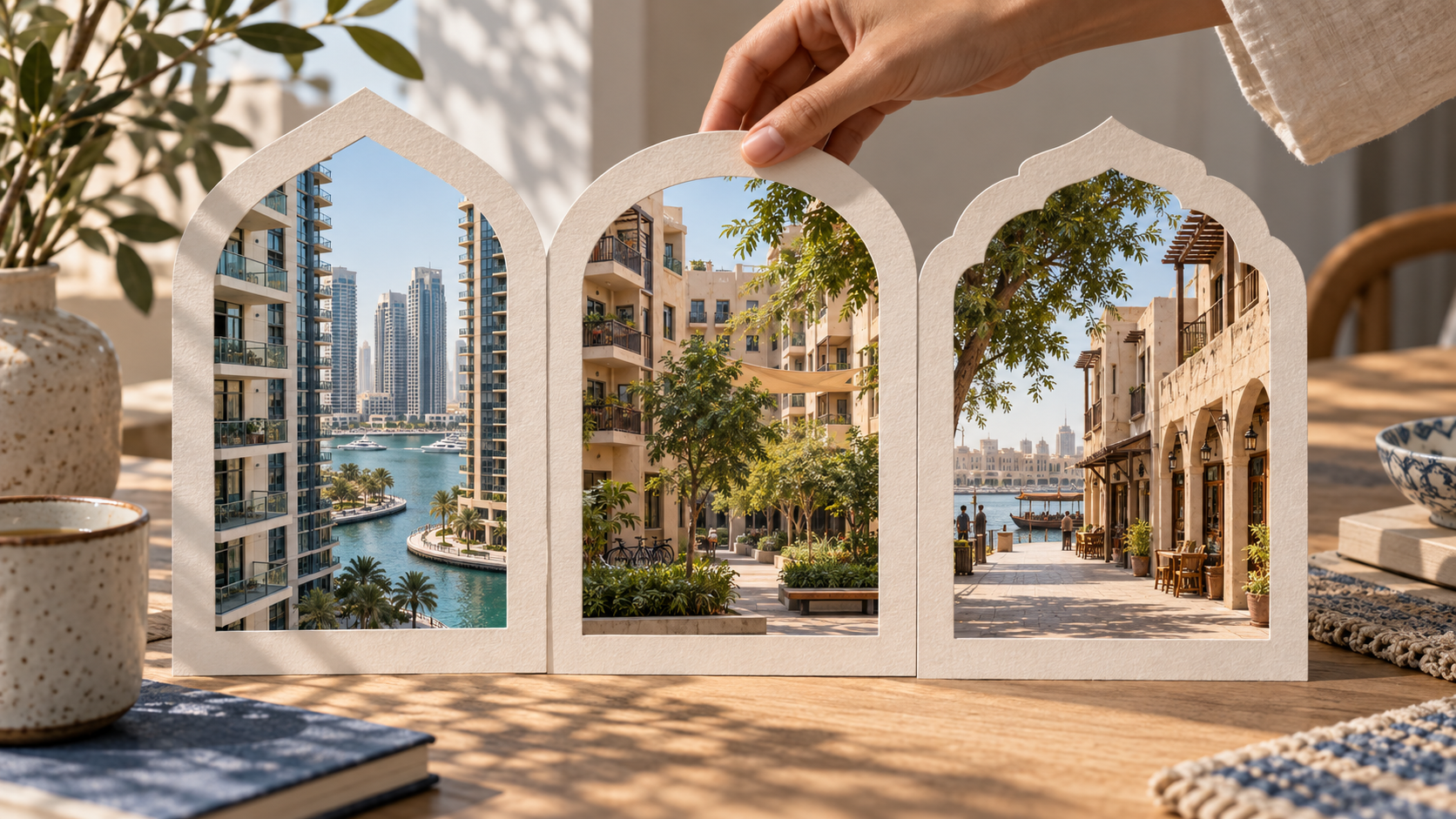
It is more useful to divide the city by everyday living patterns than by “rich” and “poor”. Waterfront towers provide views, promenades and an active environment, but often come with heavier traffic and higher density. Central districts shorten the journey to offices and restaurants, although the choice of building becomes especially important. Villa communities provide more privacy and family infrastructure, but make a car almost essential. Historic districts around Dubai Creek offer metro access, commerce and established street life, while their housing stock is less uniform.
Before renting, test more than the apartment: check the real route to transport, shops and work.
Where Dubai’s true upper segment is found
In market research, prime residential refers to the most expensive and supply-constrained part of the housing market. It is not an official classification of residents. Palm Jumeirah, Emirates Hills and Jumeirah Bay Island have long formed the core of this segment. Their value is driven by limited supply, privacy, large plots, waterfront access and rare property formats.
Knight Frank’s Dubai Residential Market Review for the first quarter of 2026 uses a broader set of prime locations. Its analysis also includes Al Barari, District One, Dubai Hills Estate, Jumeirah Golf Estates, Jumeirah Islands, La Mer and Tilal Al Ghaf. This is an important distinction: Dubai’s upper segment is evolving and is no longer limited to its three most famous addresses.
Even the term prime, however, describes a property market rather than the biography of every resident. Palm Jumeirah contains apartments of different sizes and ages, while large villa communities include different plots, development phases and levels of finish.
Downtown and Business Bay: central, but not one lifestyle
Downtown Dubai is one of the city’s most recognisable addresses. A high concentration of landmarks, hotels, restaurants and contemporary residential towers makes it prestigious and convenient for people who value centrality. It also brings tourist traffic, major events and substantial differences between individual buildings.
Business Bay sits nearby but is even more mixed. It combines offices, homes, hotels and the canal, with properties ranging from compact studios to large penthouses. Saying that people there “have no money” is clearly absurd, but treating the entire district as a single luxury enclave would be equally inaccurate. The individual building, its access roads, the walk to the metro and peak-hour traffic matter greatly here.
Dubai Marina and JBR: water, density and an active rhythm
Dubai Marina is an upmarket waterfront district with high-rise homes, restaurants, promenades and connections to the tram and metro. JBR adds beach access and a stronger resort atmosphere. Both are expensive and highly sought-after locations, making the viral description of Marina as a place for people with no money particularly nonsensical.
A famous location does not guarantee uniform comfort. The view, floor, age of the tower, lifts, parking, noise and the time required to leave the district may shape daily life more than the word “Marina”. The area suits people who enjoy an energetic environment and are willing to accept density, visitor traffic and periodic congestion.
JVC: not a billionaire enclave, but a large everyday district
Jumeirah Village Circle, better known as JVC, is a rapidly developing residential area with apartments, townhouses and villas. It is popular with young professionals, couples and families because the range of housing is broad and the number of shops, schools, parks and everyday services continues to grow.
There is no credible basis for calling JVC a “billionaire district”. It is better understood as a large, mixed market where the decision depends on budget, the quality of the particular development and a willingness to drive. JVC has no direct metro station, so a commute should be tested in peak traffic rather than estimated from distance on a map.
Arabian Ranches: a family-oriented villa environment
Arabian Ranches is a well-known low-rise community with villas, green spaces and family infrastructure. Depending on the development phase, property type and plot, homes sit in the upper mainstream or premium parts of the market. Residents tend to value space, privacy and a quieter pace.
Calling it simply a “millionaires’ district” misses the point. A prospective resident should instead decide whether a life away from the metro, daily travel by car and a calmer environment without central-city density suit their routine.
Dubai Creek Harbour: a new district still taking shape
Dubai Creek Harbour is planned as a contemporary waterfront district with residential towers, a promenade and new public spaces. Modern homes and view-oriented apartments make it attractive to buyers and tenants, but the area is still developing.
It is therefore premature and unhelpful to describe it only as a place “for millionaires”. It is more important to establish which amenities already operate near a particular building, where construction is continuing, how road access works and whether the current infrastructure matches the marketed vision.
Deira: historic and commercial Dubai
Deira is neither an elite enclave nor the territory of one social group. It is a historic part of the city beside Dubai Creek, with markets, trade, metro stations, hotels, offices and highly varied housing. It is denser, older and busier than many of Dubai’s new master-planned communities.
The “ultra-millionaires” label may have started as a joke about the area’s trading culture, but it is useless when choosing a home. Deira can make sense for people who value established street life, public transport and commercial activity. The condition of the individual building, parking and noise should be checked particularly carefully.
Al Barsha: several different areas under one name
Al Barsha is often treated as a single point on the map, although its subdistricts differ significantly. It includes apartment streets close to Mall of the Emirates and the metro, quieter villa areas, schools, clinics and everyday retail. Both housing and the resident mix are diverse.
Calling it a “poor district” is not only offensive but factually meaningless. Al Barsha may be a practical choice for a family, someone working in a nearby business cluster or a resident who wants convenient services without a waterfront premium. Once again, the decision must be made at the level of a specific part of the district and an individual building.
A quick guide to neighbourhood formats
Palm Jumeirah, Emirates Hills and Jumeirah Bay Island
Living format: upper segment, privacy and rare property types.
Best suited to: people who value the status of an address, space or proximity to the water.
What to check: property age, service costs, ease of access and the actual level of privacy.
Downtown and Business Bay
Living format: central high-rise districts close to offices, restaurants and urban activity.
Best suited to: people who want a shorter trip to the business centre and enjoy a busy city rhythm.
What to check: the individual tower, noise, the route to the metro, parking and peak-hour congestion.
Dubai Marina and JBR
Living format: dense waterfront living with promenades, restaurants and beach access.
Best suited to: people who enjoy the water, active streets and leisure options close to home.
What to check: traffic, lift performance, building condition and noise.
JVC and Al Barsha
Living format: mixed everyday districts with a broad choice of apartments and family housing.
Best suited to: families and professionals who value practicality more than the symbolic status of an address.
What to check: the commute, the specific part of the district and the quality of the development.
Arabian Ranches
Living format: a quiet villa community with family infrastructure and green spaces.
Best suited to: people looking for calm, privacy and more space.
What to check: dependence on a car and the length of daily journeys.
Deira
Living format: historic commercial city life with metro access, markets and varied housing stock.
Best suited to: people who value transport, commerce and life in an established part of the city.
What to check: the building, noise, parking and surrounding streets at different times of day.
Dubai Creek Harbour
Living format: new waterfront development with contemporary homes and infrastructure still taking shape.
Best suited to: people who want modern housing and are comfortable living in an evolving district.
What to check: amenities already in operation, access to the building and nearby construction.
Abu Dhabi is not a district of Dubai
Viral lists sometimes place Abu Dhabi alongside Dubai Marina or Downtown. This is a geographical error: Abu Dhabi is a separate emirate and a separate city with its own economy, property market and urban logic. The two can be compared as places to live, but not as neighbouring districts within the same city.
How to choose a neighbourhood without status labels
Test the journey at the actual time you will travel. Drive or take public transport from the property to work or school in the morning and evening. Distance in kilometres does not always reflect travel time in Dubai.
Evaluate the building, not only the district. Ask about its age, management quality, lifts, air conditioning, parking rules and the condition of shared areas.
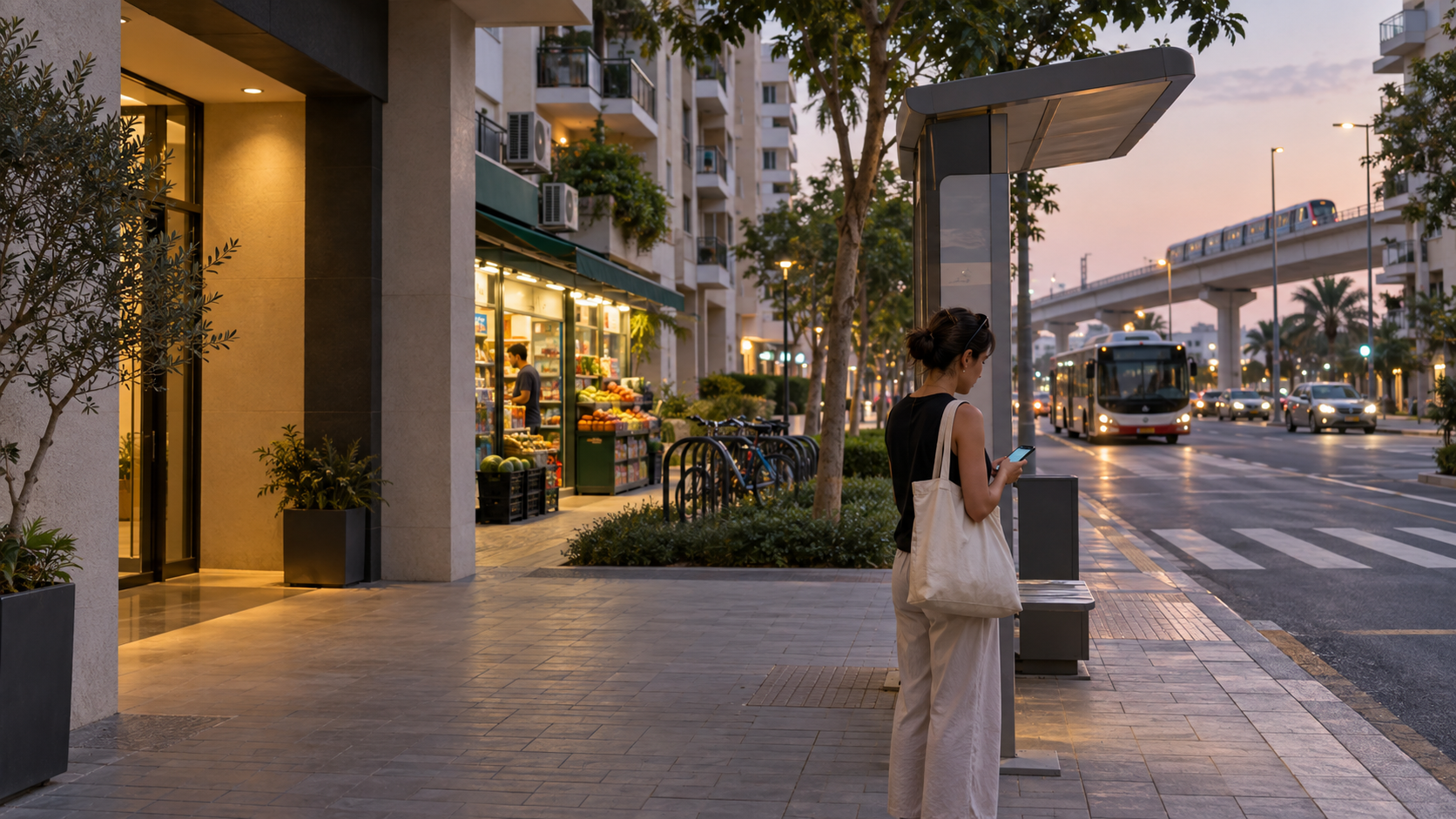
Walk around the immediate area. Shade, pavements, crossings, a grocery shop, pharmacy and transport stop can shape daily life more than an impressive view.
Compare like with like. A studio in an older tower and a new family apartment in the same district are different products. A neighbourhood average often conceals that difference.
Visit more than once. A quiet afternoon may turn into heavy evening traffic, while a calm weekday may feel very different at the weekend.
Check current evidence. Ask for recent transactions and contracts for comparable properties. Treat listings as asking prices rather than final market values.
The best neighbourhood is not the one whose name creates the strongest impression. It is the place where the chosen home, budget and daily route combine into a sustainable life. Prestige matters in Dubai, but accuracy matters more when making a long-term decision.
If you are choosing a convenient base for a short introduction to the city rather than a long-term home, see our carousel on where to stay in Dubai on a first visit.
The property market, transport access, construction and neighbourhood infrastructure change over time. Before renting or buying, verify current conditions for the particular building and contract.